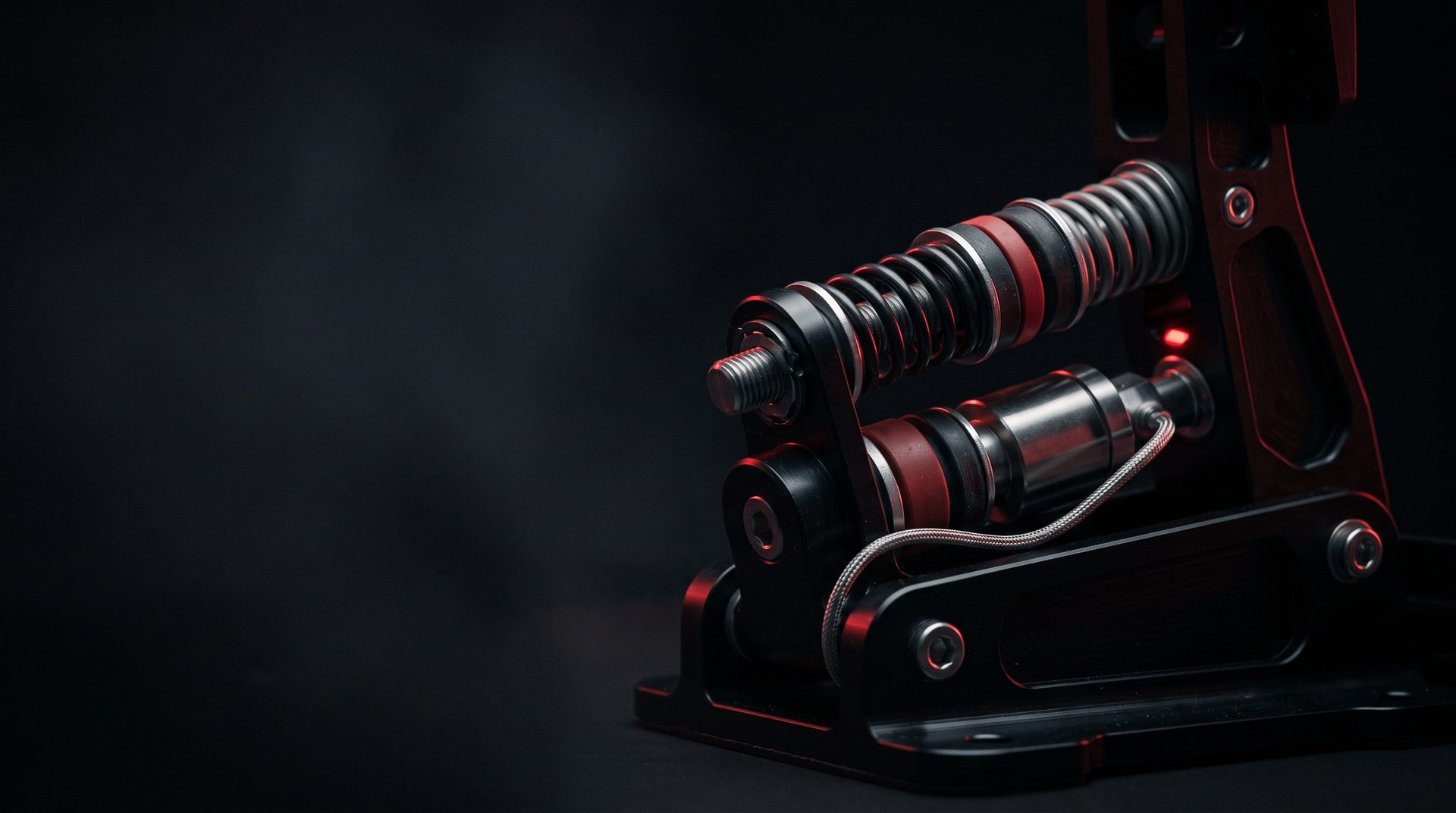
Load Cell Pedals Explained: Why They Make You Faster
Potentiometer vs load cell vs hydraulic, what kilograms of brake force mean, and how to set yours up.
The short version
Potentiometer pedals measure how far you press. Load cell pedals measure how hard you press. Your leg is far better at repeating pressure than position, so a load cell brake makes your braking consistent, and consistency is lap time.
Three types of brake sensor
- Potentiometer: measures pedal travel. Cheap and common in starter sets, but hard to repeat precisely.
- Load cell: measures force with a strain sensor. The pedal barely moves at the top of its travel, just like a real race car brake.
- Hydraulic: a real hydraulic cylinder and fluid, the closest thing to a race car. Found at the top of the market, like Asetek’s Invicta pedals.
Why force beats travel
Under braking, your brain controls muscles by pressure, not by measuring millimetres of pedal movement. With a load cell you learn “this much push” for each corner, and you can repeat it lap after lap. That’s why upgrading pedals usually brings a bigger gain than upgrading the wheelbase.
What the kilograms mean
A load cell’s rating (75 kg, 100 kg, 200 kg) is the most force it can measure. A higher range doesn’t force you to brake harder; it gives you room to set a stiffer pedal. Examples from our pedal rankings:
- Logitech G RS: 75 kg load cell, the starter option.
- Logitech G PRO Racing Pedals: 100 kg load cell.
- MOZA CRP2: 200 kg load cell with a 15-bit angle sensor.
Setting them up
- Mount them solidly. A firm brake on a sliding pedal set is useless. Bolt them to a cockpit if you can.
- Set the elastomers or springs for the feel you want: softer for road cars, stiffer for GT and formula.
- Calibrate max force so full braking happens at a push you can repeat comfortably.
- Give it a week. Your braking will feel wrong for a few sessions, then suddenly click.
FAQ
What does a 200 kg load cell mean?
It's the maximum force the sensor can read. You won't press 200 kg, but a higher range lets you set a firmer pedal without maxing out the sensor.
How firm should my brake be?
Firm enough that you can hit full braking repeatably without straining. Many drivers start around a firm press and stiffen it as they adapt. Calibrate so maximum braking happens just before your comfortable maximum push.
Grid Kult Racing earns a commission on some purchases made through links on this page, at no extra cost to you. Specs are manufacturer figures, checked at the time of writing. How we make money.
Keep reading
Related guides
 Top 10 The 10 Best Direct Drive Wheelbases of 2026 From 5 Nm starter bases to a 35 Nm monster, ranked by ecosystem, platform and how serious you are.
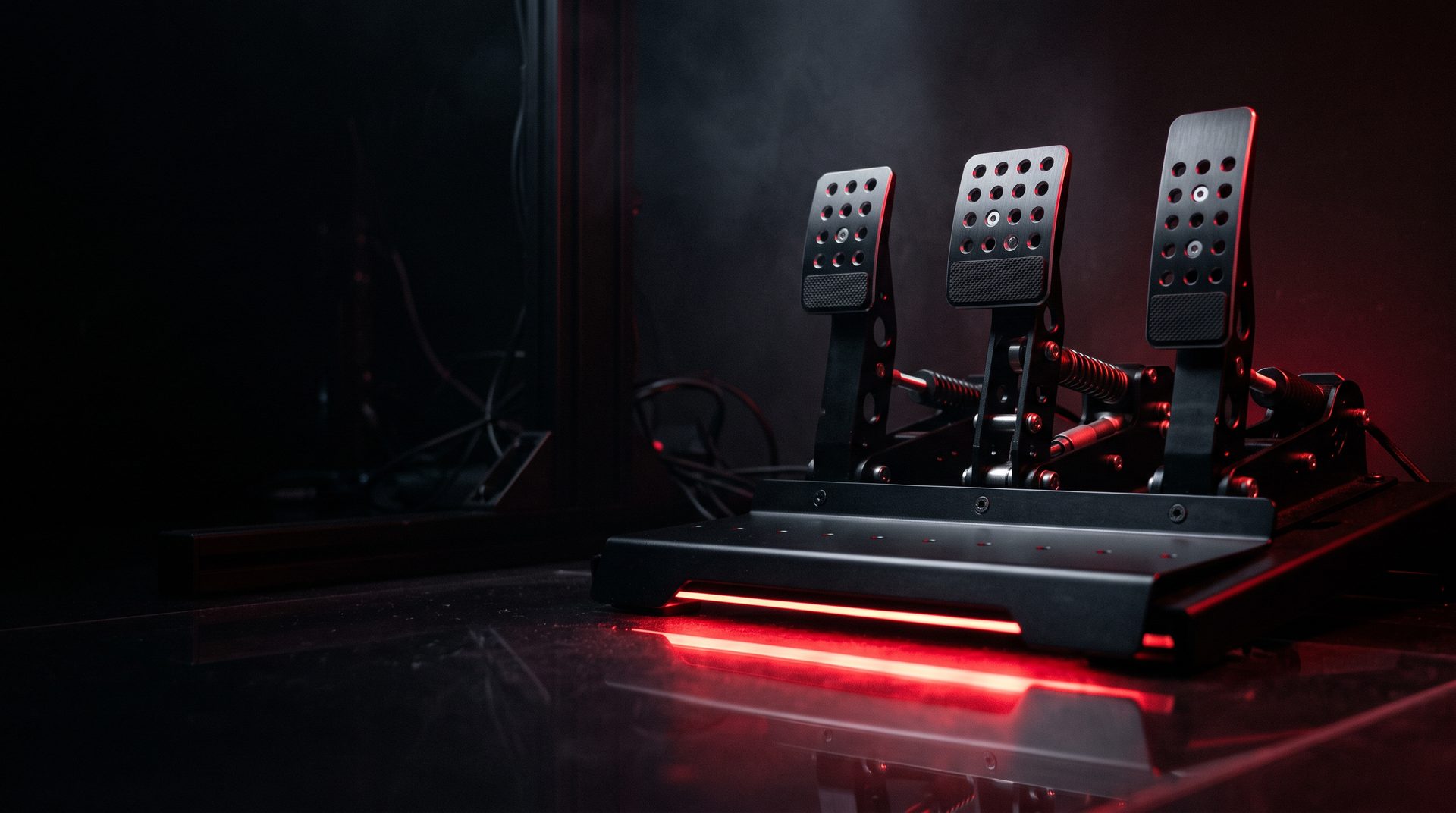 Top 10 The 10 Best Sim Racing Pedals of 2026 Load cell, hydraulic and budget sets ranked. The upgrade that makes you faster sooner than any wheelbase.
 VS Fanatec vs MOZA in 2026: Which Ecosystem Should You Buy Into? Rims, pedals, platforms and upgrade paths, compared side by side. The biggest decision in sim racing, made simple.